
Atlanta is booming with population growth, new developments, and infrastructure renovations across the city. With the population expected to grow by 1.7 million over the next 25 years and the FIFA World Cup coming to Atlanta, the demands for new construction and infrastructure updates are rising fast. Today’s large-scale projects are not just about quickly putting steel in the air, it’s about finding ways to do it smarter, more efficiently, and more cost-effective, all while quality never gets compromised.
A typical large-scale construction project involves 25 to 30 subcontractors. Each one a potential source of delay, miscommunication, or cost overruns. While everyone focuses on the big-ticket items, it’s often miscellaneous steel such as stairs, platforms, racks, that derail timelines when not prioritized. Now more than ever Atlanta needs construction methods that reduce risk, save time, and keep quality high even under pressure. That’s where steel fabrication and more importantly, turnkey heavy lifting and delivery, become critical. Developers don’t need more vendors. They need the right partner.
The Pressure for Faster, Smarter Builds
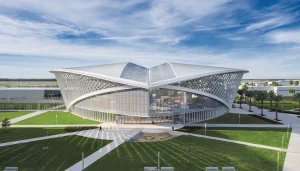
Timelines are no longer flexible, they’re critical, especially with the World Cup and the promise of the NHL coming back. Add to that the ongoing Concourse D expansion at Hartsfield-Jackson, the busiest airport in the world, and you’ve got a perfect storm of a high stakes project where delays aren’t simply inconvenient, they can cost millions. The sheer volume, variety, and speed of projects underway have changed how the city builds. Developers and general contractors need construction methods that speed up timelines while ensuring budgets and quality are never compromised. A big part of this is working with a trusted partner and more importantly, one who can provide turnkey solutions. This is especially true when it comes to steel fabrication. Each handoff between companies handling steel reduces flexibility for adjustment. A company that both fabricates and erects steel has more control over last-minute adjustments and ensures that material is transported and installed on time. The margin for miscommunication is drastically reduced.
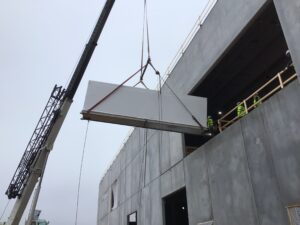
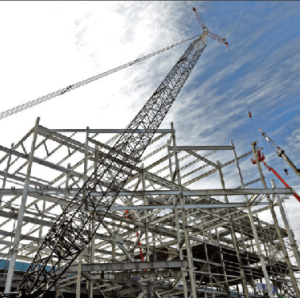
Pre-fabricated steel components are built off-site in controlled environments. This means teams can work around the clock without worrying about rain or site restrictions. Once these components are made, they can be delivered to the job site and lifted into place. What would take weeks to accomplish can be done in a matter of days. Installations become faster and safer through the use of prefabricated steel and turnkey solutions. The fewer hands the work passes through, the more achievable a high level of excellence becomes
Keeping the city from slowing down is vitally important. The quicker work can be completed safely and correctly, the less time a road needs to be closed. Every hour saved reduces disruption. In short, prefabricated steel allows projects to move forward without grinding the city to a halt. At the scale that Atlanta is growing, the demand for smarter construction will not slow down, it will only rise. Especially with events such as the World Cup coming to Atlanta, the pressure for a quick and quality build is on.
Meeting Atlanta’s Data Center & Tech Expansion Needs
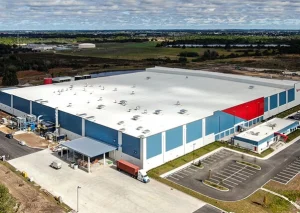
Atlanta has established itself as a major digital hub. Over the past decade, the city has quietly become a magnet for data centers, cloud infrastructure, and tech-forward enterprises. Amazon Web Services (AWS), for example, has committed $11 billion in data center investments across Georgia. While the state may not match the scale of data-centric infrastructure seen in California or Texas, its competitive edge lies in targeted tax incentives and reduced regulatory burdens, a combination that’s drawing a wave of new development. Some of these data campuses exceed one million square feet, demanding steel structures engineered to support massive server arrays and heavy-duty cooling infrastructure.
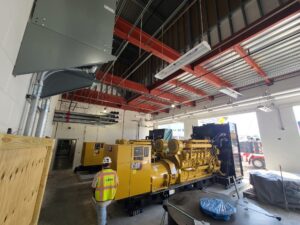
The data center boom is not a bubble, it’s projected to accelerate for as long as the state’s energy sources can keep with it. With the advancement of AI and the need for more server space and cooling systems, data centers are only going to become more important. Building data centers isn’t easy. Developers face unique challenges around load-bearing requirements, open floor plans, tight schedules, and constant design revisions. Data centers require wide, open spaces for uninterrupted rows of servers, meaning internal columns must be minimized. Vast networks of power and cooling systems need space to move beneath the floor. Overhead, enormous HVAC units, pipe racks, generator stands, and backup systems require steel framing capable of carrying intense loads. These are not generic builds. Every square foot must be engineered for precision, strength, and efficiency.

This is where prefabricated steel becomes essential. Off-site fabrication allows key structural components, from pipe racks to generator stands, to be manufactured in parallel with site preparation. AWS invested $80 million dollars in just one project to make the site level and get it prepared for construction. By the time the jobsite is ready, the steel is already on its way, minimizing delays and on-site labor. Installation requires fewer adjustments, and the schedule remains secure. Turnkey delivery adds another layer of control. There’s less room for miscommunication or missed timelines with fabrication, transport, and installation handled under one roof. That kind of speed and predictability isn’t a luxury in data center construction. It’s the difference between staying ahead or losing millions to a missed launch window.
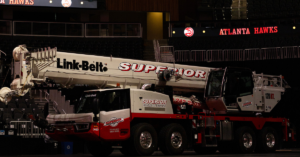
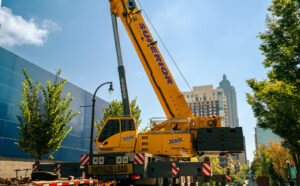
At Superior Rigging & Erecting, we’ve seen this urgency firsthand. Our crane teams, rigging crews, and fabrication shop support several high-priority tech infrastructure builds across Georgia. More importantly, we’re seeing a shift: developers no longer just want steel, they want partners who can deliver turnkey services, from the first weld to the final bolt.
Quality & Safety
In a dense city like Atlanta, safety is paramount due to the nature of the work at hand. Crews work alongside busy highways, near airport runways, and between occupied high-rises. A minor mistake in Atlanta can ripple into major consequences such as traffic delays, injuries, or serious structural setbacks. Steel fabrication plays a large role in reducing these risks. By building key components in controlled shop environments, rather than on chaotic job sites, crews can ensure tighter quality control. It is far easier to spot flaws in a fabrication shop than it is over 100 feet in the air.
Turnkey services also help developers have a safer job site, by having a cleaner jobsite. Oftentimes when a large number of partners are working on a project, many of them need to store their materials on-site until the time to do their part comes. But if working with a subcontractor that offers turnkey services, their materials are usually stored off-site until they can be used. A cluttered jobsite is an unsafe jobsite. Having less vendors makes the jobsite cleaner and more open, thus making it safer.
Once prefabricated components are on-site, they can be installed faster and with fewer moving parts. That reduces the amount of time that workers spend in vulnerable situations. Reducing the amount of risk during a job. Due to Atlanta’s increasing safety regulations, prefabrication ensures that materials are already up to code by the time they arrive on-site.
From a quality standpoint, prefabrication ensures that every component is made to spec. Helping eliminate delays caused by having to do work over again is paramount to keeping a job’s timeline secure. At Superior, we’ve seen firsthand how fabrication can improve safety and the quality of work on complex jobs. Our crews are able to focus on precise placement and clean execution, because the materials they’re working with were built right the first time.
Turnkey Solutions
As construction schedules tighten and project complexity grows, owners and general contractors across Atlanta are rethinking how they manage risk. The more vendors involved in a job; the more things can go wrong. It’s not uncommon for general contractors to work with 25+ partners on a large build, each one introducing risk to the schedule. More and more, they’re turning to turnkey service providers. These are companies that can deliver multiple scopes of work under one roof to simplify communication, reduce delays, and keep everything moving on schedule. Attempting to coordinate separate subcontractors for fabrication, delivery, rigging, and installation only enhances risk. All it takes is for one link in the chain to fall behind or miscommunicate before the entire project is stalled. That’s why turnkey services are becoming the go-to strategy, especially for large-scale infrastructure jobs that demand speed.
Steel fabrication is a natural fit for this approach. Especially when it comes to installing miscellaneous steel. Often, one company will handle the erection of structural steel and another will handle miscellaneous. This can lead to a slower install as a company has to fit another vendors work. Even if it’s done flawlessly, communication between the two companies is much slower than if it had all been handled under one roof.
Conclusion
The challenges general contractors face in Atlanta aren’t going away, they’re multiplying. Now more than ever, GC’s need reliable partners who can deliver consistent results. They can’t gamble anymore on juggling thirty vendors and hoping it all lines up. Turnkey providers that can handle steel fabrication are vitally important. Again, it’s not just about structural steel. Miscellaneous steel, when delayed or poorly handled, becomes the hidden killer of project schedules.
That’s why at Superior, we give it as much of our attention as anything else. Keeping the health of your timeline is essential to the Superior way, and it’s essential to any turnkey provider. You don’t need more vendors. You need the right partner. One that fabricates, delivers, lifts, and installs without the handoffs, holdups, or headaches. Whether you’re building the next data hub, airport expansion, or any tough job in between, we make it look easy.